Newsletters


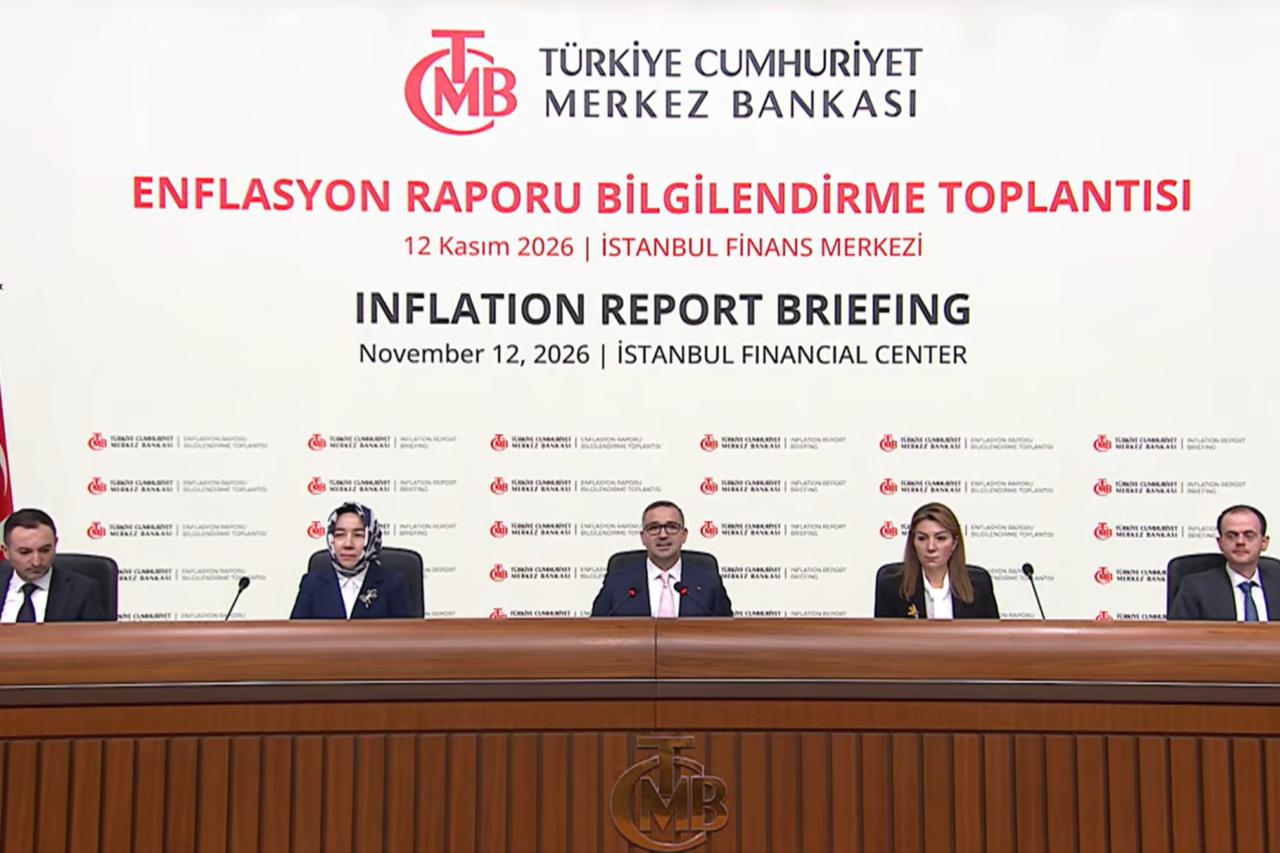


The Central Bank of the Republic of Türkiye (TCMB) has raised its 2026 year-end inflation forecast to 29.5%, up from 28% projected in August, while also revising its projections for 2027 and 2028 higher as the prolonged Iran war continues to drive up energy prices and fuel inflationary pressures.
Governor Fatih Karahan unveiled the revised outlook on Thursday, projecting annual inflation to fall to 21% by the end of 2027 and 13.5% by the end of 2028. The bank had previously forecast inflation at 15% for 2027 and 9% for 2028.
"This revision to the forecasts was driven by war-related developments," Karahan said. "Continued uncertainty over the course of the war and the expectation that energy prices will remain elevated for longer than anticipated in the previous Report period had an upward impact on the inflation forecasts."
The latest revision follows an earlier upward adjustment in May, when the central bank raised its 2026 forecast to 26%. The TCMB also set its interim inflation target at 9% for the end of 2029, before inflation gradually converges toward its longer-term target of 5%.
Karahan highlighted the sharp rise in crude oil and natural gas prices in September and October, as disruptions to energy supplies and shipping routes continued to push up import and transportation costs.
The governor specifically pointed to mounting risks around the Strait of Hormuz, where restrictions on alternative shipping routes, higher insurance premiums and regional tensions have driven up freight rates.
"Longer trade routes and increased insurance costs significantly drove up the freight rates," Karahan noted, adding that developments in November had brought only a limited decline.
Against this backdrop, the TCMB significantly raised its annual average oil price assumptions to $97.2 for 2026 from $87.8 in its previous report, while its projection for 2027 climbed to $86.7 from $76.4.
"Weakening expectations regarding the normalization of energy shipments through the Strait of Hormuz and escalating tensions in the region have pushed oil prices higher," Karahan explained.
The bank also raised its import price assumptions for both years, while increasing its food price projections for 2026 to 31.3% from 28.5% and for 2027 to 24% from 19%, citing higher energy and transportation costs.
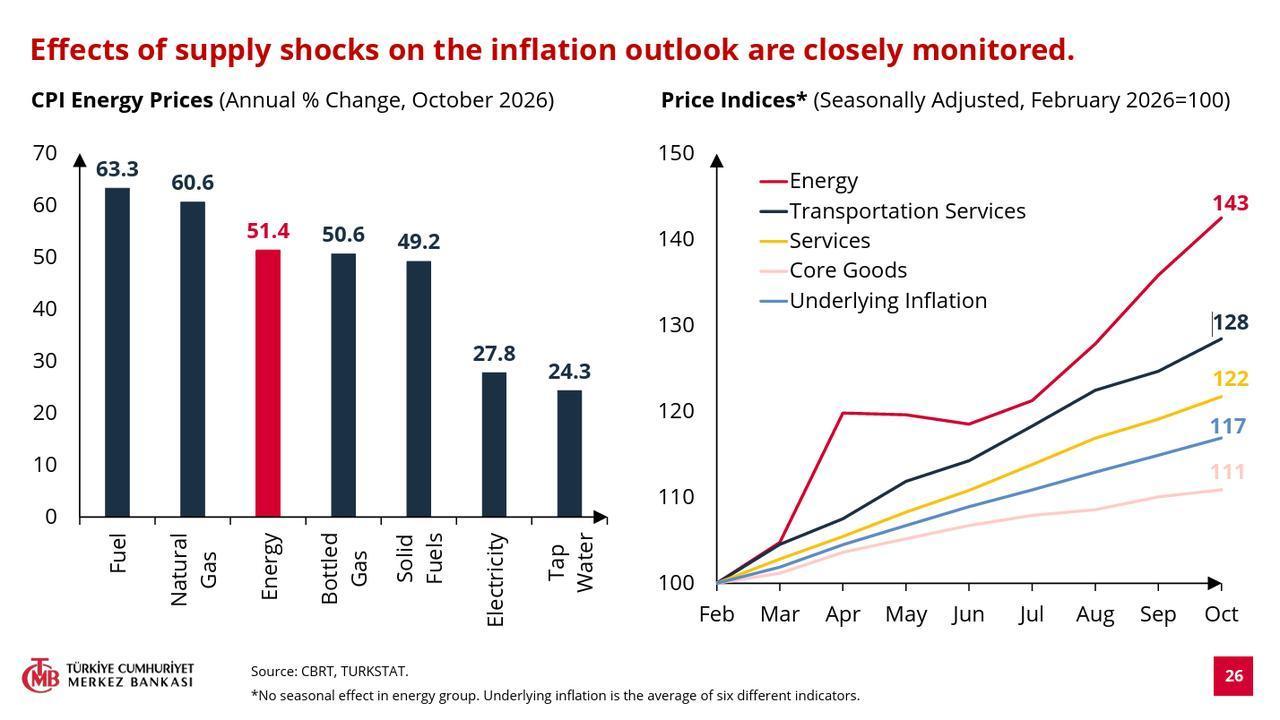
Annual consumer inflation stood at 29.8% in October, while annual inflation in the energy group climbed to 51.4%, making it the only main expenditure group in which inflation increased compared with the previous year.
Energy prices have risen 43% since February, compared with a 17% increase in underlying inflation, according to the central bank.
Karahan warned that indirect price pressures could intensify if energy costs remain elevated, noting that "we don’t overlook the risk that indirect effects could get stronger if the rise in energy prices becomes permanent."

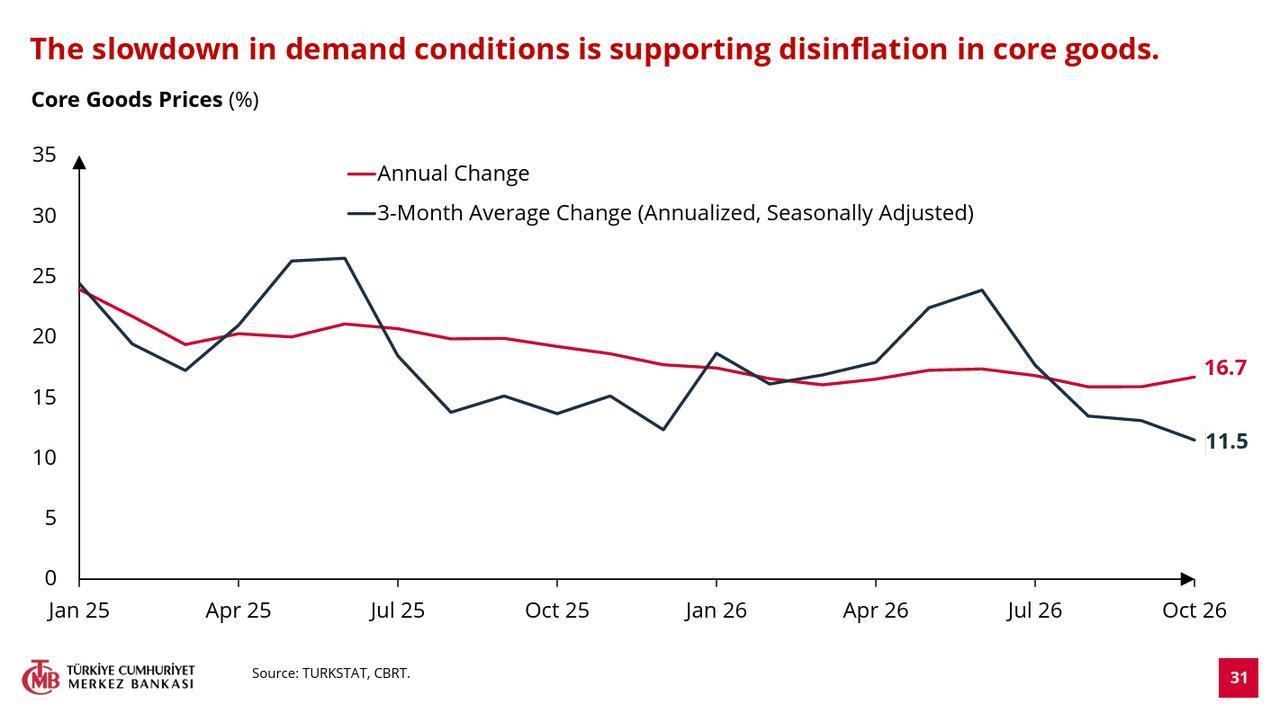
Despite the external pressures, the central bank highlighted weakening domestic demand as a key factor helping contain underlying inflation.
Türkiye's economy expanded by 2.3% year over year in the second quarter, slowing from previous periods as final domestic demand lost momentum. Net exports, meanwhile, made a positive contribution to annual growth.
Indicators for the third quarter point to further weakness. Industrial production declined, retail sales growth slowed, and credit card spending remained broadly flat.
The central bank also noted that capacity utilization remained below its historical average, while broader labor market indicators pointed to weakening employment conditions.
"Taken as a whole, data on demand indicators show that demand conditions are at disinflationary levels," Karahan noted.
The bank expects this trend to continue in the coming period, with weaker domestic demand also helping limit pressure on the current account balance.
Meanwhile, tourism revenues reached $51.3 billion in January-September, up from $50.1 billion in the same period of 2025, offsetting a slight decline in visitor arrivals.
Karahan reiterated that the TCMB would maintain its tight monetary policy until price stability is achieved, despite improvements in underlying inflation.
The central bank lowered its policy rate by 100 basis points to 36% at its October Monetary Policy Committee meeting, following the normalization of its monetary policy framework in August.
The shift back to one-week repo auctions brought overnight money market rates down from the upper band of 40% to 37%, while the weighted average cost of funding declined by a total of 400 basis points following the August normalization and October rate cut.
The bank also introduced liquidity measures and adjusted its macroprudential framework in response to developments in financial markets, including measures to contain contagion risks stemming from the mutual fund market.
Meanwhile, gross international reserves fell by $49 billion from $210 billion on Feb. 27, 2026, to $161 billion on Nov. 6. Of that decline, $28 billion stemmed from falling gold prices.
Net reserves excluding swaps also dropped by $50.4 billion over the same period to $28 billion.
Karahan stressed that the improvement in underlying inflation had become increasingly visible, particularly in services and core goods, but warned that geopolitical supply shocks continued to limit the decline in headline inflation.
He added that the central bank would continue to assess inflation trends over several months rather than base monetary policy decisions on individual monthly readings.


 Set as preferred source
 Set as preferred source


 1 min read
 1 min read