Newsletters


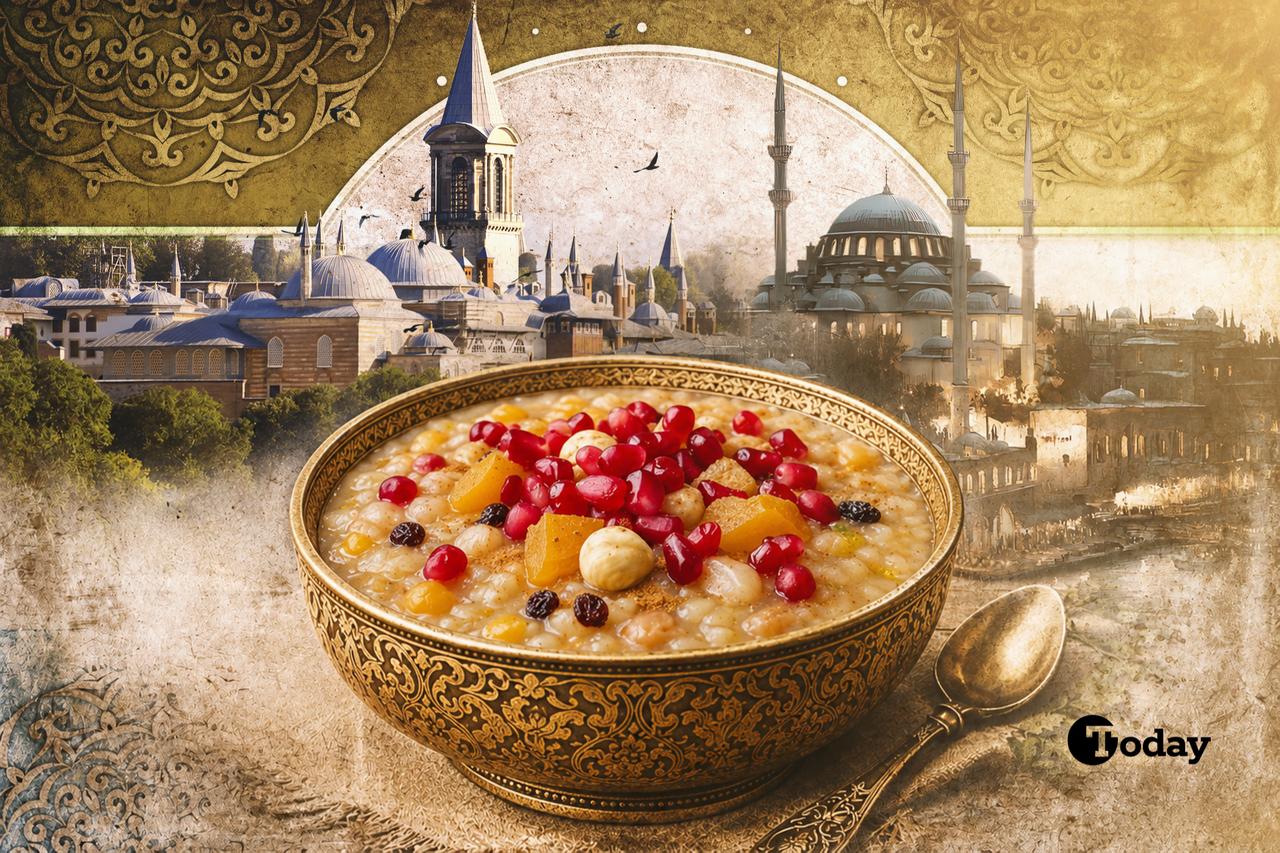


Asure, also known as Noah's pudding, looks like something that lost a fight with a larder and was reclassified as a dessert on humanitarian grounds.
It arrives in the color of old bandaging, studded with nuts and dried fruit, like something that was found rather than made. The French have built entire patisserie academies to prevent this sort of thing from happening.
A local once described it as what might happen if a dessert truck crashed into an "aktar," one of those Turkish spice and dried goods shops where half the stock appears medicinal and the other half looks prepared to survive a siege.
It contains beans. Chickpeas. Whole wheat berries. Rice. Not in the apologetic, italics-in-the-menu “with a playful nod to the kitchen-garden” kind of way, but with a thousand-mile stare. You approach the bowl the way you approach a guard dog on a threshold: respectfully and prepared for things to go either way.
First-timers brace for something approaching sweet hummus, but what you get is something else entirely.
It’s deep, grainy and quietly complex with apricots arriving and retreating like a junior diplomat who has misread the room. It accumulates rather than performs. It is the compound interest of desserts, which is to say it’s unglamorous for years and then suddenly, inexplicably, essential.
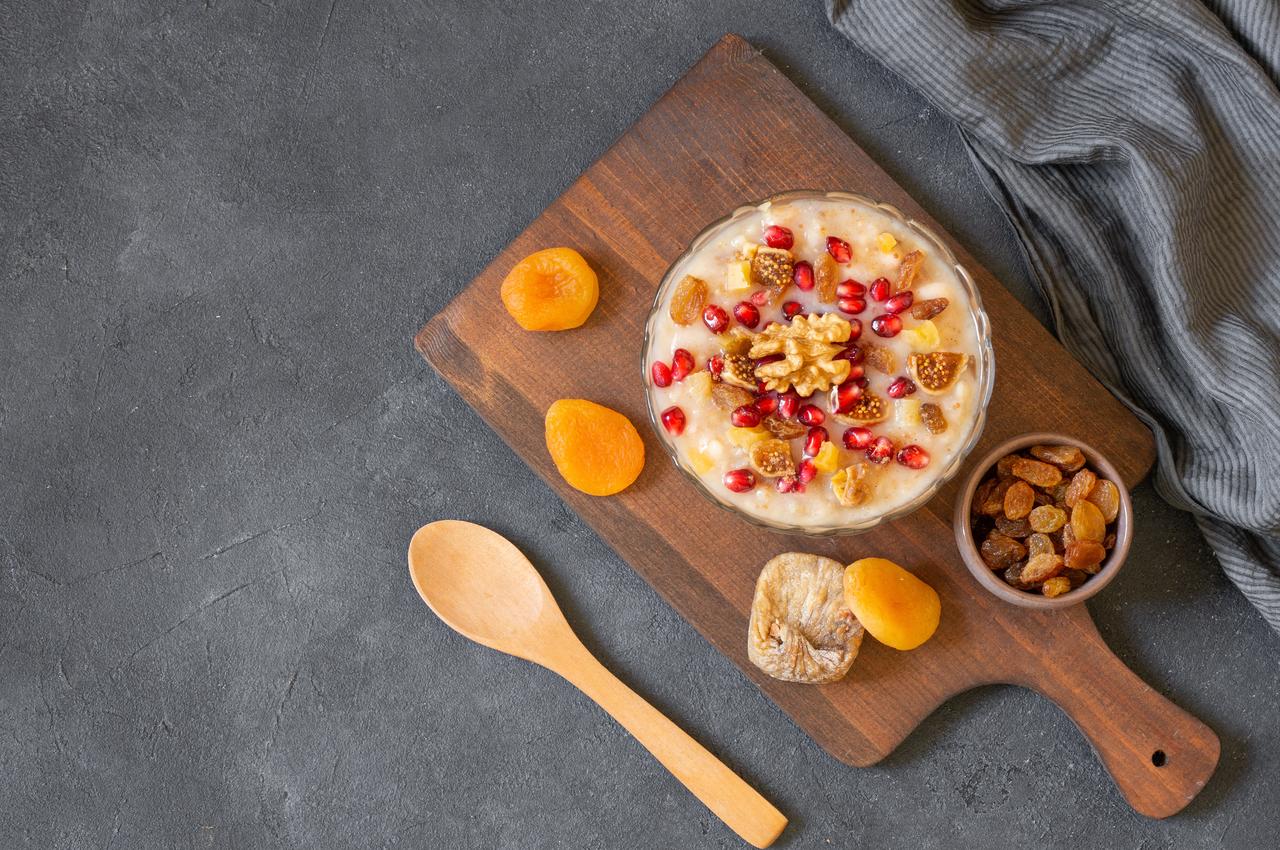

There is no canonical recipe, which is either a profound expression of communal wisdom or a catastrophic failure of editorial control. Some insist on seven ingredients. Others 10. There’s even a faction that demands 40, which at that point stops being a recipe and becomes a slightly worrying indication of a cook's relationship with their larder.
The Ottomans, characteristically, could not encounter a dish without stratifying it. Honey Asure for those queuing outside the palace gate. Sugar Asure for those inside the walls. And for senior officials—strained, scented with musk, the olfactory equivalent of being addressed by your full name—a version that announced its own importance before it arrived in the room.
You did not need to read the palace gazette to understand your position in the Ottoman cosmos. You could smell it coming down the corridor.
For up to 10 days during Muharram, the palace kitchens dispensed Asure at the gate from cauldrons to queues extending down the street. The same empire that rationed proximity to the sultan down to the length of an aigrette was out ladling mass bean pudding for the general public.
What began as imperial distribution survives, naturally, as domestic labor.

Making it at home is an act of commitment that borders on the irrational.
The wheat and chickpeas soak overnight in bowls large enough to suggest the chef has lost perspective or has mistaken dessert for emergency planning. The next morning, the wheat goes into the pot alone. It simmers first, clouding the water with starch, softening by degrees. Only then do the chickpeas and beans join it, and later the rice, and later still the fruit.
You stir occasionally, not heroically. This is not risotto. The pot thickens slowly and with intent, like someone drafting a complaint to your superior. When it begins to seize, you add water. In the early stages, the kitchen smells faintly of an English beer cellar. Once the sugar and dried fruit go in, it changes its mind and becomes something warmer, almost festive.
Time passes, and then, insultingly, some more. You check your phone, rotating slightly away from the pot in case it judges your attempts at self-distraction.
Sugar goes in last, in a quantity that suggests someone lost control of the tablespoon. The whole thing thickens decisively, usually when you are least prepared for it, the way certain conversations do.
The only serious domestic dispute is the ideal thickness. Some households produce a spoonable Asure. Others make something that sets. Too thin and you are accused of parsimony, of not caring, of having perhaps been raised without values. Too thick, and you have made masonry and called it dessert.
Somewhere between these poles lies social acceptability, and no Turkish household agrees on precisely where.
Then the bowl leaves the house.
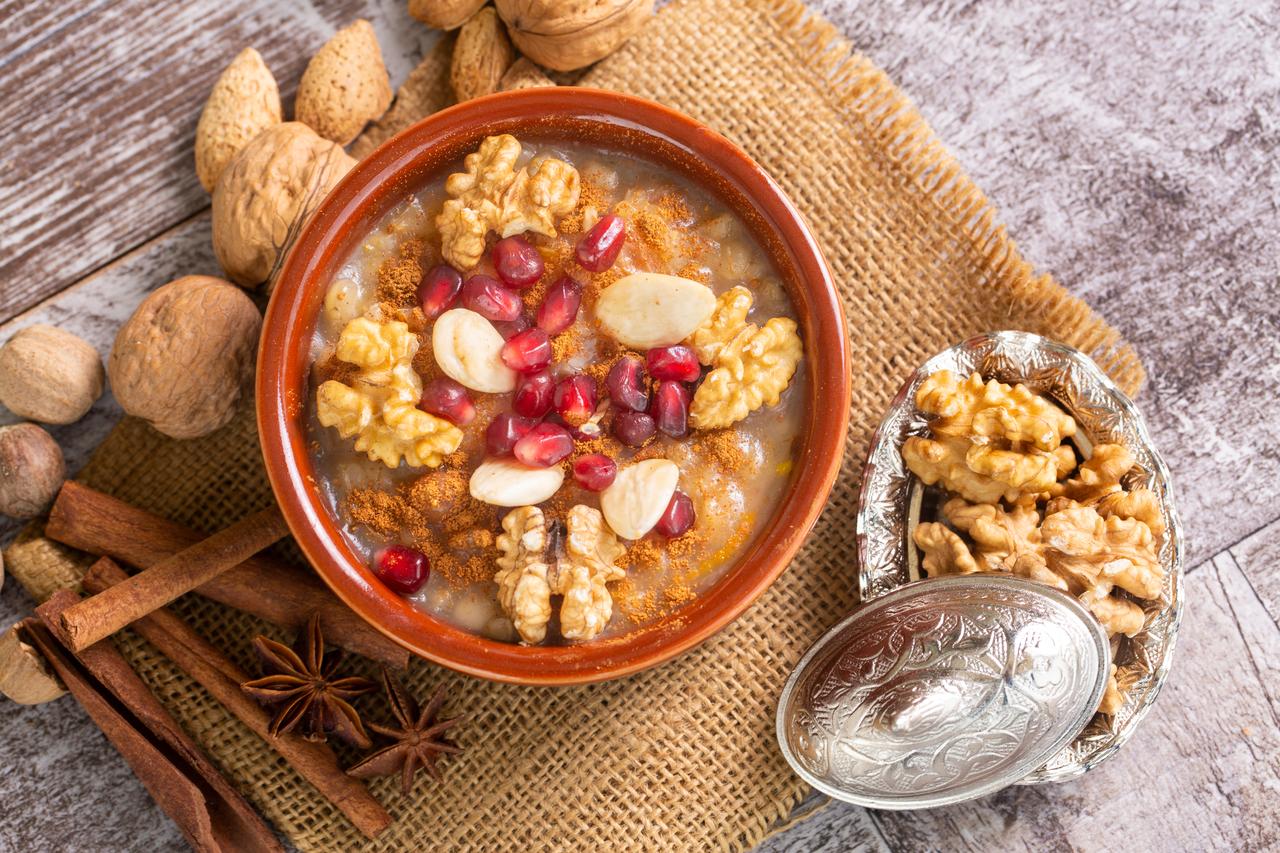
The real trouble begins once the bowl leaves. It cannot return empty. That is barbarism or, at the very least, a loaded gesture. But it also cannot return overfilled because that is a direct challenge, a declaration of superiority.
Entire apartment blocks have drifted into cold wars on the back of a bowl. A neighbor adds extra pomegranate seeds. You respond with pistachios. They come back with blanched almonds arranged with a dusting of cinnamon that implies the use of professional kitchen tools. Soon, people are shelling hazelnuts at midnight or ordering boxes of edible gold leaf online just because wounded pride has a certain momentum. Feelings never ran this high over Lausanne.
And it can all be pinned on Noah, who allegedly swept the last provisions into a pot as the waters receded and invented Asure by accident. Or perhaps on Prophet Muhammad, who encountered Jewish neighbors fasting in Medina, though the fast came first and the pudding attached itself later with entrepreneurial zeal. Armenians make the same thing at Christmas. Sephardic Jews make it for Tu BiShvat. Nobody agrees on the name or the occasion, only Noah’s branding.
This makes Asure almost unique in this part of the world: a dish defined not by a country's insistence but by an entire civilization's inability to agree on anything except the bowl.
Most dishes in this region are like stifado: simple, fierce and hotly contested to the point of violence. Asure went the other way. It kept adding ingredients until ownership became absurd, crossed every religious boundary until nobody could claim it, and survived not through devotion but through sheer accumulation.
Noah’s flood took everything, yet the pudding kept going.
 2 min read

Ingredients
To finish
Method
1) Soak the grains and legumes
The night before cooking, soak the wheat berries, chickpeas and beans separately in plenty of cold water.
2) Cook the wheat
Drain and rinse the wheat. Place in a large heavy-based pot and cover with fresh water (about 2 liters to start). Bring to a boil, then reduce to a gentle simmer. Cook for 60–90 minutes, until the grains are fully tender but still intact. The liquid should become cloudy and lightly thickened from the starch.
3) Prepare the legumes
If using dried chickpeas and beans, cook them separately in fresh water until completely tender but not falling apart. Drain and add to the wheat.
If using tinned legumes, add them directly to the pot once the wheat is tender.
4) Add rice
Stir in the rice and continue simmering for about 20 minutes, stirring occasionally to prevent sticking. Add hot water as needed to maintain a loose, porridge-like consistency.
5) Add dried fruit
Stir in the apricots, figs and raisins. Simmer for a further 15–20 minutes until the fruit has softened and the mixture has thickened.
6) Sweeten and flavor
Add the sugar and stir until fully dissolved. Adjust sweetness to taste. Stir in the rosewater and orange zest. Continue cooking gently for another 5 minutes.
The finished Asure should be thick but still pourable. It will thicken considerably as it cools; if necessary, loosen with a little hot water before serving.
7) Serve
Ladle into bowls and allow to cool to room temperature. Garnish with pomegranate seeds, chopped nuts and a light dusting of cinnamon.
Asure is traditionally shared. This recipe makes more than most households need; for that reason.


 Set as preferred source
 Set as preferred source


 1 min read